
How to Check Criminal History in Dallas County
No single database contains every Dallas County criminal history record. A filed case starts with Just One Look or the Circuit Clerk. Current county custody starts with the Dallas County Jail. A possible unserved warrant requires an in-person inquiry at the Sheriff because that process is not public before service. State prison custody belongs in the ADOC Inmate Search, while a person reviewing their own fingerprint-linked Alabama history must use ALEA Form 46.
Prepare a full legal name, spelling variants, an approximate filing or arrest year, and a case, citation, incident, booking, or AIS number when known. Then use the record path that answers the actual question:
- Search Just One Look for a filed District or Circuit Court case, or call the Circuit Clerk for an official file and older material.
- Call the Dallas County Jail for present local custody. Ask the arresting agency for its report if jail staff cannot answer the record question.
- Contact Selma Municipal Court for a Selma ordinance, traffic, or adopted misdemeanor matter that may remain outside county criminal court.
- Appear at the Sheriff to check a suspected unserved warrant. A public fugitive list is not a full warrant clearance.
- Use ALEA's fingerprint application to inspect and, if needed, challenge one's own statewide criminal history.
When an online result is missing, check the court level, spelling, older non-imaged files, and the time needed for a disposition to reach the state repository. Selma Municipal Court answers by phone at (334) 876-1299 or at its 1300 Alabama Avenue counter.
Four Records Behind a Dallas County Arrest
A single Dallas County arrest can create four records with different custodians. The arresting agency writes an incident or arrest report. Jail staff make a booking record and collect identifiers, fingerprints, a photograph, booked charges, and custody details. A magistrate and court then create probable-cause, bond, charge, hearing, and disposition entries. Finally, arrest fingerprints and the later court result may be joined in ALEA's statewide criminal-history system.
The official Dallas County Sheriff's Department overview shows the local law-enforcement and jail functions together.
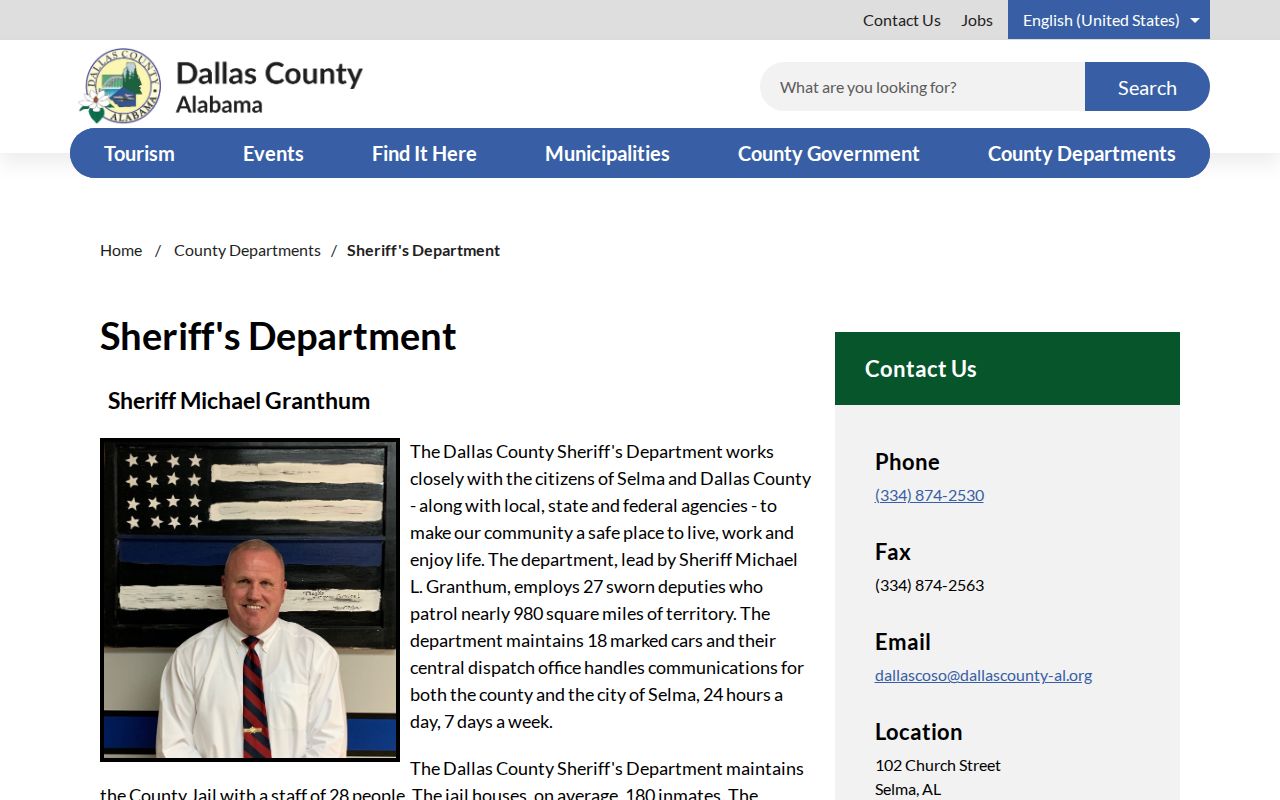
That local starting point does not replace the court file or ALEA record. A booking proves intake, not guilt, and the charges later filed by a prosecutor may differ from the allegations recorded at arrest.
- Booking
- Jail intake after an arrest, including identity and custody facts.
- Disposition
- The outcome or current status of a filed charge.
- CHRI
- Fingerprint-linked Criminal History Record Information maintained through ALEA.
- Expungement
- A court-ordered process that removes qualifying records from ordinary public access.
Official Alabama Background Checks
Alabama does not offer an unrestricted public name search of ALEA's compiled criminal-history repository. The neutral public route is a person's review of their own Alabama Criminal History Record Information. It requires current Form 46, a classifiable fingerprint card from a law-enforcement agency or other fingerprint service, accepted photo identification, the applicant's signature before two witnesses or a notary, and payment by cashier's check or money order.
The ALEA personal criminal-history instructions show the official self-review route and distinguish it from the restricted Alabama Background Check System.
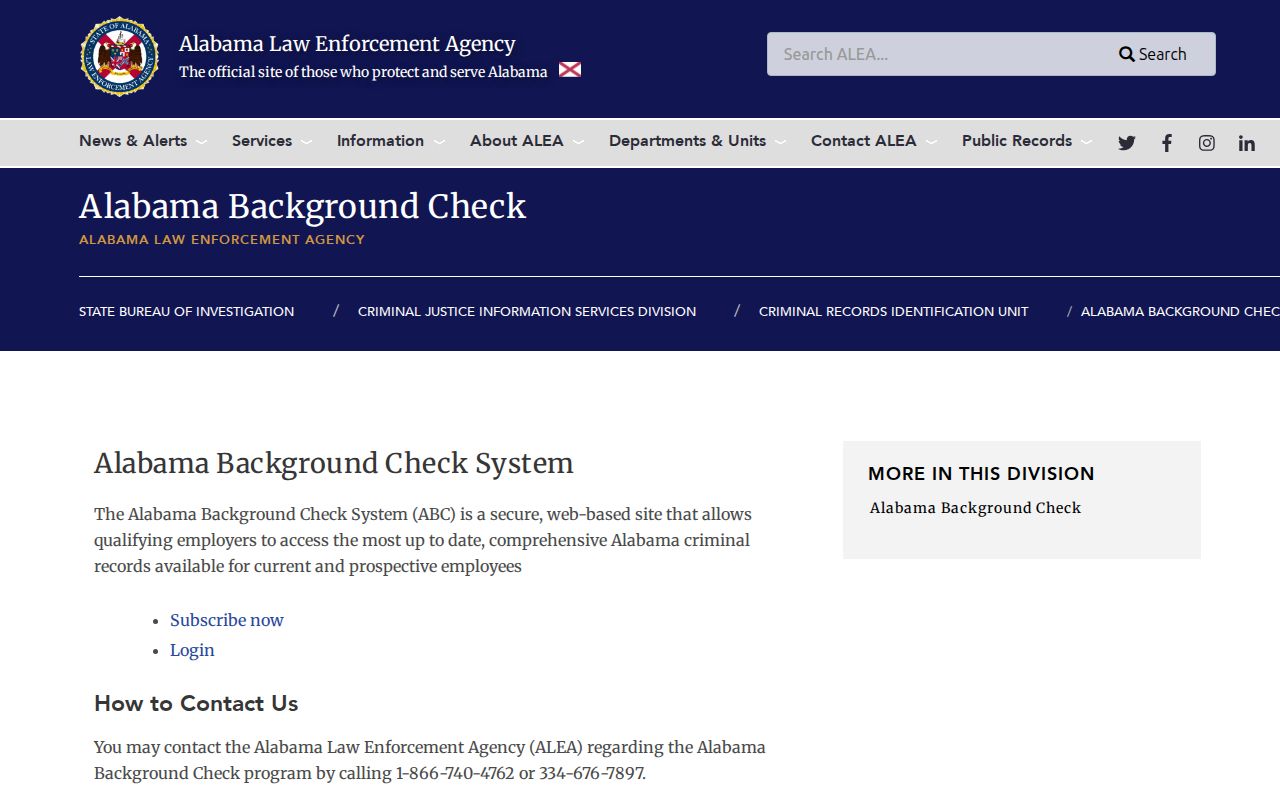
A complete submission may be mailed to P.O. Box 1511, Montgomery, AL 36102-1511, or hand-delivered at 301 South Ripley Street on the Adams Avenue side. ALEA gives a minimum processing estimate of 5 to 10 business days after receipt and answers background-check questions at (334) 676-7897. The Dallas County Sheriff does not publish whether it offers applicant fingerprint cards, so call before relying on that service.
| Official service | Published cost | Key limit |
|---|---|---|
| ALEA personal CHRI review | $25 | Own fingerprint-supported Alabama history |
| Each extra ALEA copy | $5 | Added to the same request |
| FBI Identity History Summary | $18 | Separate federal self-review; fingerprint cost may be extra |
Dallas County Court Search vs ALEA
Just One Look and an ALEA record review answer different questions. Just One Look is a paid public court product. It can show a selected Alabama trial-court case, including basic case data, status, parties, settings, finances, case actions, and available images. A name or case-number purchase costs $9.99 and includes one case detail. A no-match search is still billable. The Circuit Clerk remains the source for an official or certified Dallas County court file.
The Just One Look access screen shows the account-based entry point for one-time public case access.
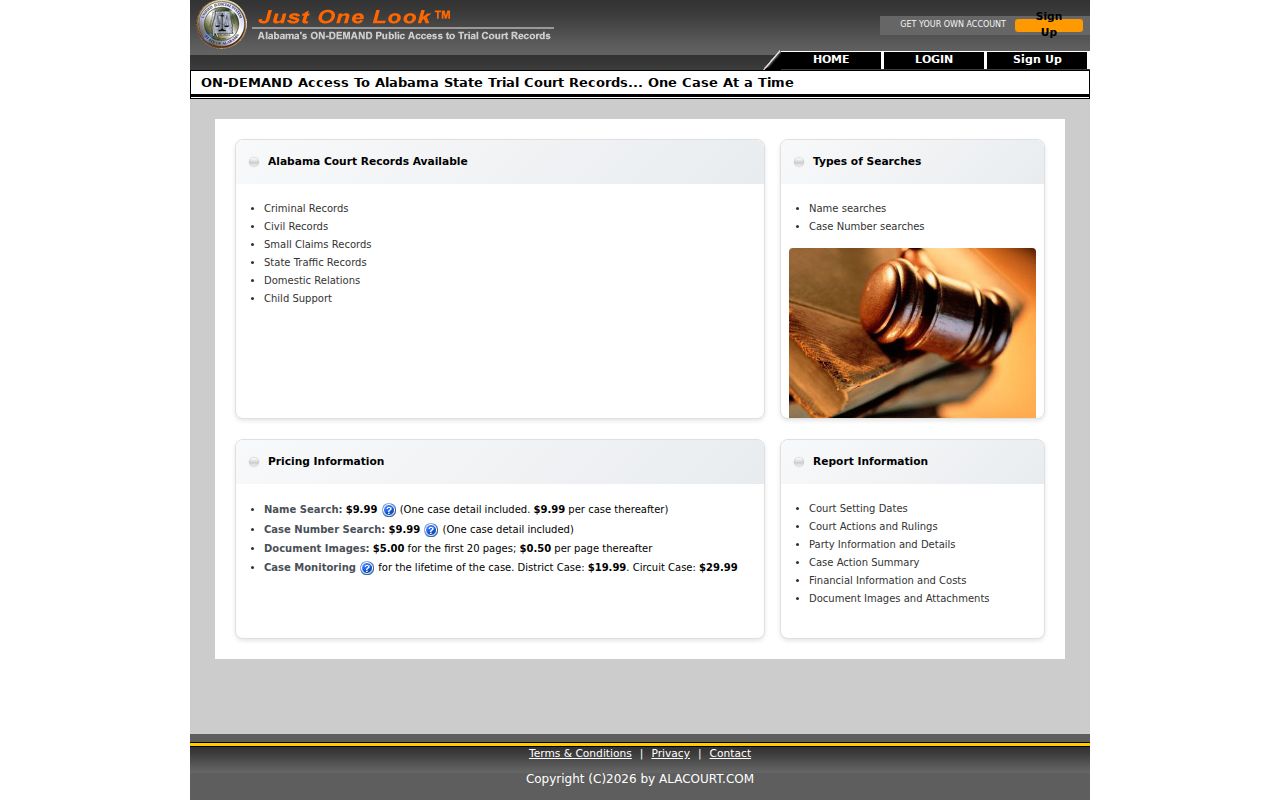
ALEA Form 46 instead assembles the applicant's own reported fingerprint-linked arrest cycles across Alabama. It is the stronger route for finding a missing or wrong disposition in statewide criminal history. Compare a disputed ALEA entry with a certified court disposition before filing the formal challenge. A court hit alone is not a statewide rap sheet, and an ALEA review is not a live jail roster.
| Channel | Best for | Fallback |
|---|---|---|
| Just One Look | Filed District or Circuit case snapshot | Dallas Circuit Clerk counter or mail |
| Dallas County Jail | Current local detention | Sheriff or arresting-agency request |
| ALEA Form 46 | Own statewide fingerprint history | Challenge with official support |
| Selma Municipal Court | City ordinance, traffic, and adopted misdemeanor cases | Phone or counter inquiry |
Types of Criminal Records
Dallas County criminal records are separated by the event and office that created them. Police and sheriff reports describe an allegation and response. Jail records document booking and current custody. Court files follow the filed charge through hearings, rulings, disposition, sentence, and financial entries. ALEA CHRI links reported arrest and disposition cycles by fingerprints, while ADOC data concerns current state imprisonment.
- Arrest and booking records: agency reports and jail intake data, neither of which proves guilt.
- Criminal court files: complaints, indictments, motions, pleas, judgments, and sentences.
- Warrant records: court and law-enforcement process, with unserved Dallas warrants kept nonpublic.
- Custody and supervision records: county jail, ADOC, federal custody, probation, and parole information.
- Registry records: legally public sex-offender details reported locally and published through ALEA.
Police reports also remain with the creating agency. Selma Police, the Sheriff, Dallas E911, ALEA Highway Patrol, and Wallace Community College Selma Campus Police each keep a distinct record slice. Felony prosecutions go to Circuit Court. District Court handles most state misdemeanors and early felony proceedings, while Selma Municipal Court handles its city jurisdiction.
Dallas County Warrant Records Stay Offline
Dallas County publishes an unusually clear warrant limit: an arrest warrant is not public until served. A person who thinks a warrant may exist must appear at the Sheriff's Department at 102 Church Street. There is no verified county warrant portal, sheriff app, or complete statewide public warrant search. The ALEA Fugitive Search is only a selected-publicity list, so an absent name there does not clear a warrant.
Jurisdiction matters. Dallas magistrates handle county felonies, misdemeanors outside Selma, county traffic matters, and certain worthless-check complaints. Selma misdemeanor and bench-warrant questions belong to Municipal Court. A missed Dallas traffic court date or unpaid amount may lead to an alias warrant and license suspension without prior notice. The clerk, court, or sheriff should confirm the actual status.
For a local report, use the Sheriff's counter at 102 Church Street, phone at (334) 874-2530, email at dallascoso@dallascounty-al.org, or fax at (334) 874-2563. No records form, report-copy fee, certification charge, identification rule, or turnaround is published. A narrow request should name the incident, date, location, creating agency, exact record, and desired format. Dallas E911 is a separate custodian for recorded emergency calls and dispatch data.
Note: Never pay a caller who claims ALEA will cancel a warrant by credit card or sends a supposed warrant by email.
What a Dallas County Criminal Record Shows
The fields depend on the source. A Dallas County booking can identify an intake event and booked allegations. A court case can show what prosecutors filed and what the judge did. ALEA criminal history can join reported cycles across the state. ADOC profiles focus on sentence and custody facts. Read the source label before drawing a conclusion from any one field.
| Name & Identifiers | Legal name, aliases, case or booking identifier, and source-specific identity data. |
|---|---|
| Arrest / Booking Data | Arresting agency, intake date, booked charges, bond, and custody facts when released. |
| Charges & Statutes | Allegations at arrest or charges later filed, which may not match one another. |
| Disposition | Pending, dismissed, acquitted, nolle prosequi, convicted, or another court outcome. |
| Sentence | Term, credit, fines, restitution, probation, and concurrent or consecutive structure. |
| Custody / Supervision | Local jail, state prison, probation, parole, release, or registry status where public. |
Public views redact Social Security numbers, victim and minor identifiers, and confidential juvenile material. Youthful Offender records are also restricted. Terms such as “pending,” “in custody,” or “supervised” describe a system status, not guilt. For more detail about filed charges and judgments, use the Dallas County criminal court case record route.
Three Dallas County Custody Searches
Current local detention, Alabama prison custody, and federal custody require different checks. Dallas County has no official online jail roster or booking log. Call the temporary jail at (334) 690-1200 for current local custody, then use the Sheriff's request channels for releasable booking material. Do not treat the county's average population of about 180 as a rated capacity. The official ADOC Inmate Search accepts an exact six-digit AIS number or a name and returns no more than the first 50 name-ordered matches.
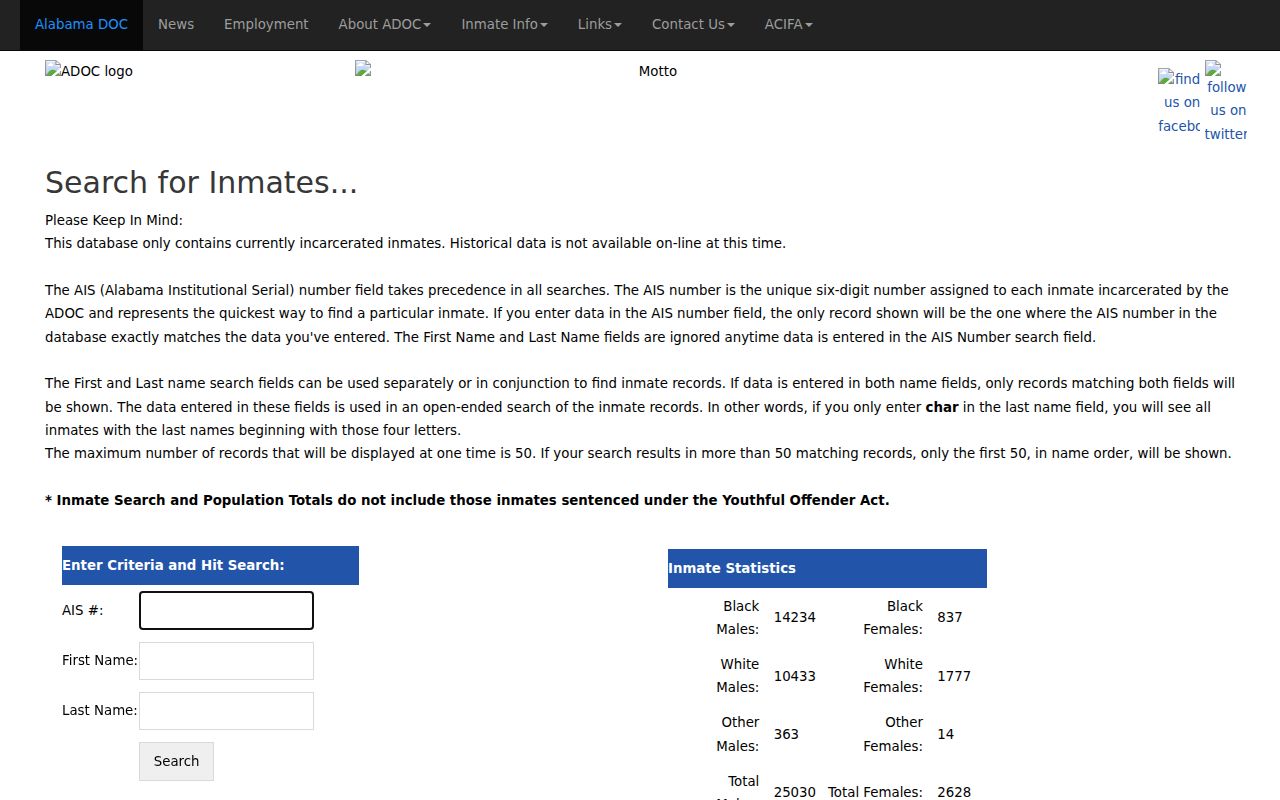
ADOC covers people currently incarcerated in state prison. It excludes Youthful Offender sentences and is not a historical Dallas County jail search. Published fields can include commit county, offense, case number, custody, sentence, jail credit, minimum release date, parole status, and term structure. Federal criminal cases and custody form a third layer. The official PACER landing page is the account-based route to federal dockets.
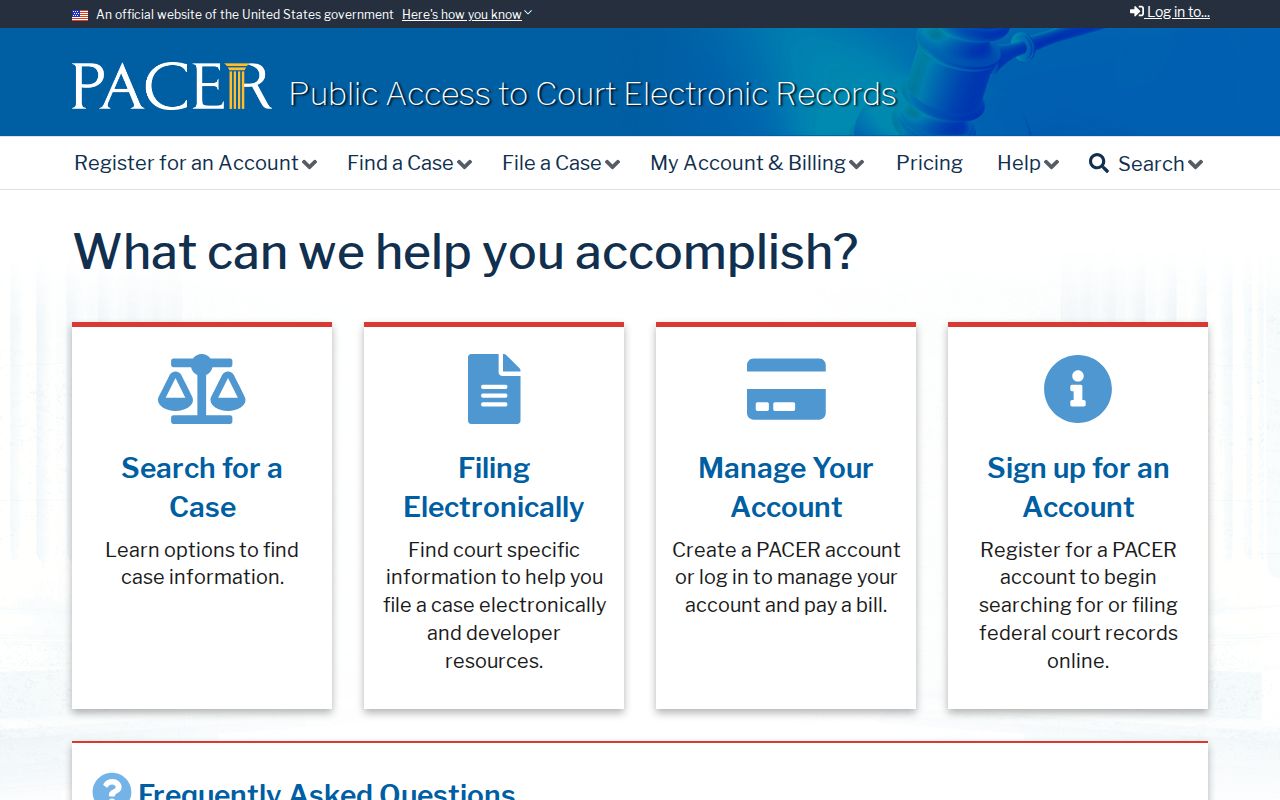
Dallas County lies in the Selma Division of the Southern District of Alabama, but the Selma federal courthouse is not staffed full-time. PACER records federal filings and unsealed documents, while the Bureau of Prisons locator answers federal custody. Neither source replaces a county jail inquiry.
Public Access Laws
The Alabama Public Records Law lets Alabama citizens inspect or copy public writings unless another law creates an exception. A request should go to the office that holds the exact report or file. That rule does not turn another person's compiled ALEA rap sheet into an open clerk record, and Alabama law supplies no simple universal response deadline.
Key statutes:
Ala. Code §36-12-40 permits inspection and copying of public writings subject to lawful exceptions.
Ala. Code §36-12-41 provides for a certified copy of an inspectable record after lawful fees are paid.
Ala. Code §41-9-636 limits dissemination of compiled criminal-history information.
Ala. Code §41-9-601 penalizes false-pretense acquisition or unauthorized communication of criminal-offender information.
Ala. Code §15-27-1 et seq. authorizes court-ordered expungement for qualifying records.
Juvenile and Youthful Offender files, expunged cases, victim and minor details, personal identifiers, and properly withheld investigative material remain restricted. Registry data is for lawful awareness and should never be used for threats or confrontation.
Dallas County Geography Shapes Record Access
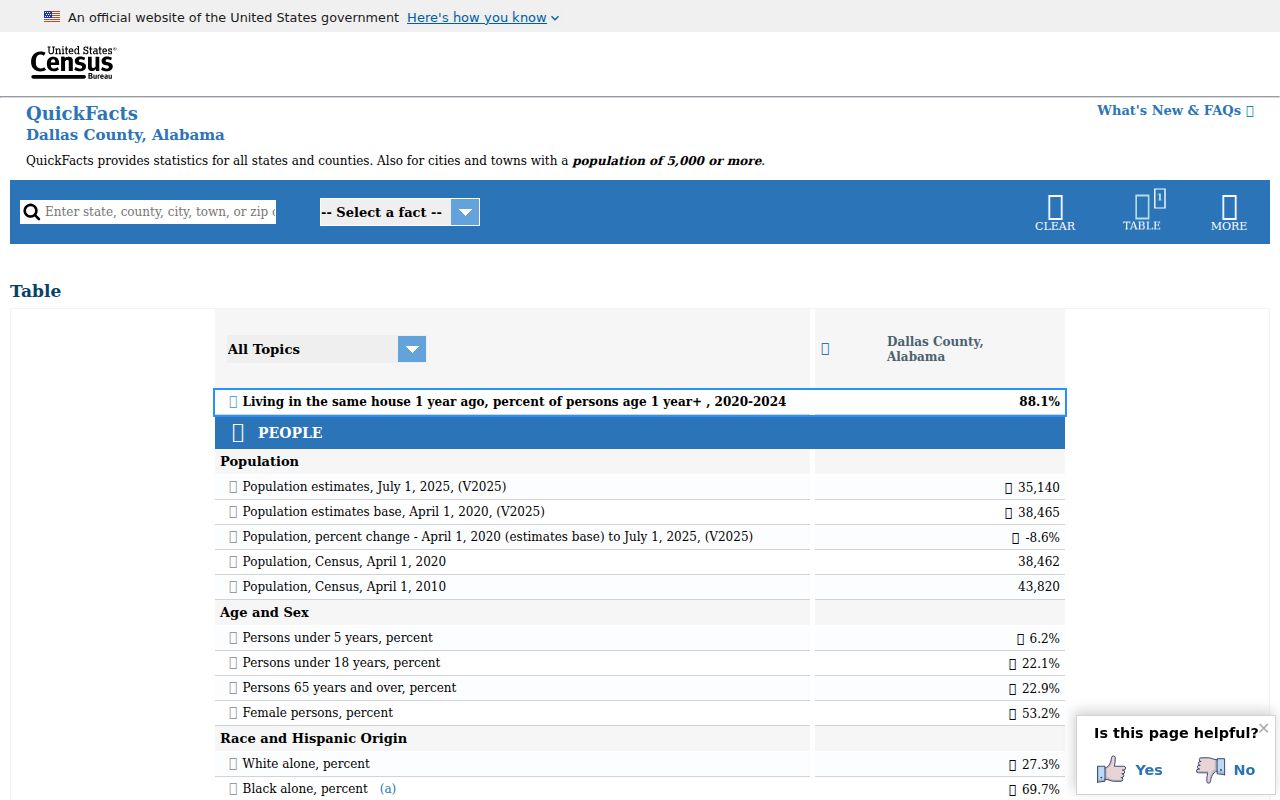
Dallas County had an estimated 35,140 residents on July 1, 2025, spread across 978.74 square miles. Selma contains about 46 percent of county residents and serves as the county seat, largest city, courthouse hub, probation and parole field-office location, and federal court town. That mix explains why many record counters are concentrated in Selma even when the incident occurred far outside the city.
The official Census QuickFacts panel for Dallas County supplies the population and land-area context.
The county's three incorporated places use different paths. Selma has its own police and municipal court. Valley Grande houses a Dallas County Sheriff substation rather than publishing a city police or court system. Orrville routes law-enforcement questions to the Sheriff and administrative records to Town Hall. Sheriff crime totals must not be relabeled as city-specific numbers.
The 1910 Dallas County Courthouse also remains a working records hub and a nationally significant civil-rights site. The Circuit Clerk maintains records for seven courts at 105 Lauderdale Street, accepts mail at P.O. Box 1148, and answers (334) 874-2523. Its public counter is open Monday, Tuesday, Thursday, and Friday, with a midday closure, and is closed to the public each Wednesday.
Sealed, Expunged & Restricted
Alabama uses expungement rather than a separate broad sealing or nondisclosure product. Qualifying nonconvictions and specified convictions may be removed from ordinary public access by court order. Violent, sex, moral-turpitude, and serious traffic offenses are among the exclusions. The current CR-65 form should control over an older ALEA kit that still says convictions cannot be expunged.
A Dallas County petition is filed in Circuit Court and identifies the court, case, exact charge or conviction, arresting agency, and each booking or detention agency. Required support can include a certified arrest record or disposition, a case-action summary, and certified ALEA history. Prosecutors and agencies receive service and may object. An order does not itself restore firearm rights, and narrow official or investigative access can remain.
The current statewide form states a $500 filing fee unless indigency relief applies. A visibly dated Dallas County page lists $300, so confirm the current amount with the Circuit Clerk before paying. If a record persists after an order, verify that the order named the custodian, send that office a copy, and review one's ALEA history again.
Dallas County Probation and Parole Records
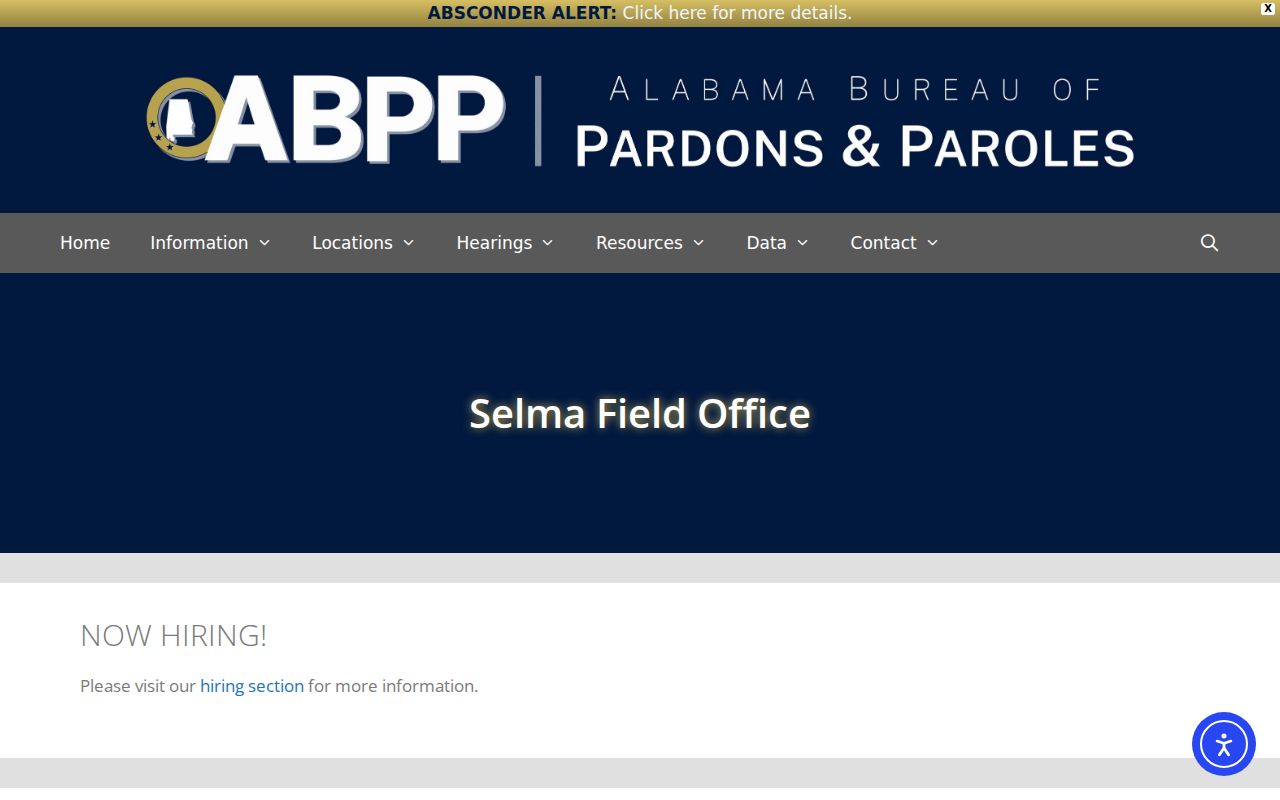
Adult probation and parole in Dallas County are state-run through the Alabama Bureau of Pardons and Paroles. The Selma Field Office at 23 Broad Street serves Dallas and Wilcox Counties. There is no verified statewide public probationer lookup, so a search begins with the sentencing docket, then checks ADOC for state custody or release facts and ABPP parole results for a hearing outcome.
The official Selma Field Office page confirms its local service area and office details.
The office can help route a supervision question, but a custody alert alone does not prove active probation or parole. Public parole hearing results can be checked by hearing date, AIS, name, result, and county of conviction. Treatment data, officer-private information, and full supervision files should not be assumed public.
Probation is a court-ordered community sentence. Parole is conditional release from prison. A revocation motion and ruling appear in the court docket, while the supervision agency holds its own operational file. Those records should be read together when the status is unclear.
Dallas County Registry Reporting Chain
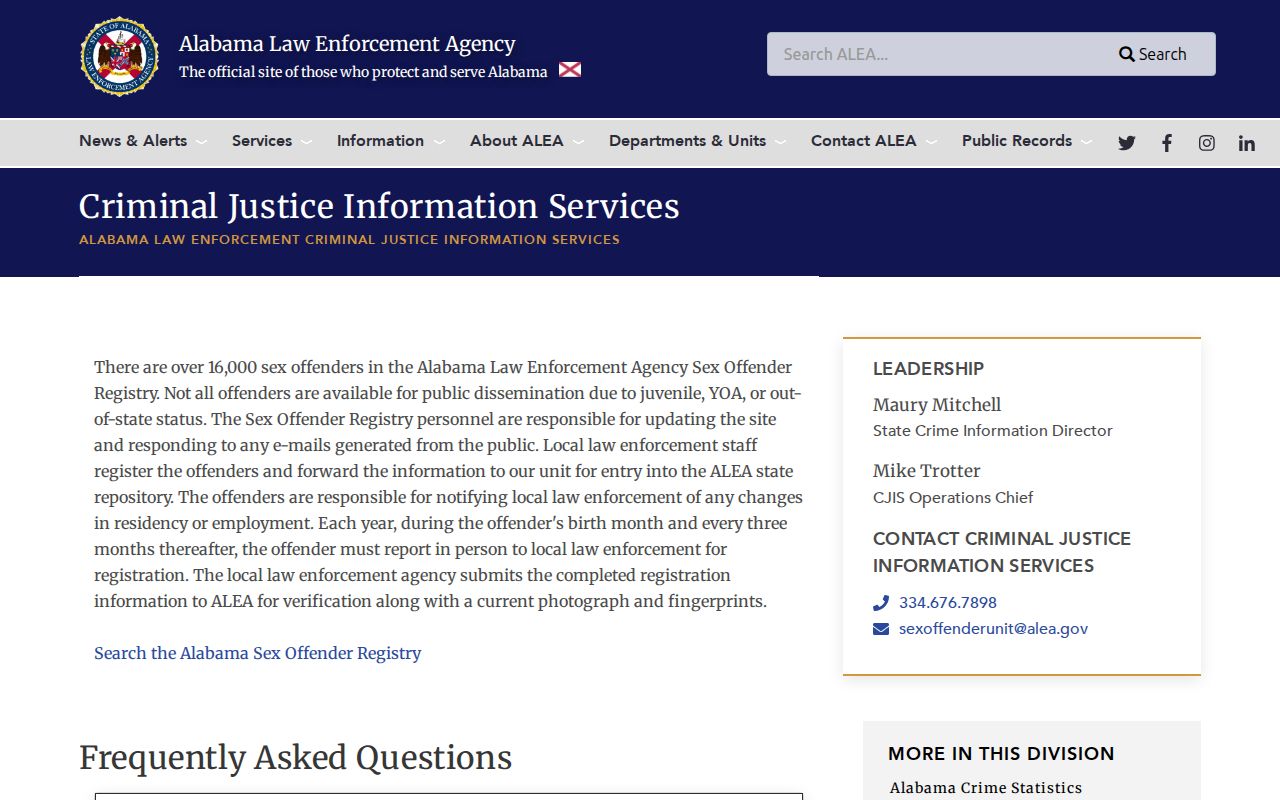
Sex-offender information begins with local registration and moves to the ALEA Sex Offender Registry. Adult registrants report during their birth month and every three months afterward. Covered changes generally must be reported in person within three business days. ALEA says the public system updates daily in real time from local submissions, so an old address may point to noncompliance rather than a portal delay.
The ALEA registry information page explains the state and local roles, registration cycle, and public-display limits.
Publication is not universal. Juvenile, Youthful Offender, offense-list, and out-of-state due-process rules can keep some cases from public display. A listed profile can include names and aliases, photo, physical traits, residence, compliance, offense, vehicles, and legally public work or school facts. Internal registry data is broader than the public profile.
Report a wrong or prohibited address to the Dallas County Sheriff. Do not confront a registrant. The state registry provides Alabama detail, while NSOPW adds a cross-state search layer. For the full search modes, profile fields, and lawful-use rules, run the Dallas County sex offender check.
Criminal Records by City in Dallas County
Dallas County has three incorporated places: Selma, Valley Grande, and Orrville. Their local record paths are not interchangeable. Selma Police and Municipal Court keep city records. Valley Grande relies on a Sheriff substation for law enforcement. Orrville uses Town Hall for town administration and the Sheriff for criminal records. Each city record guide follows those verified local channels.
Selma Criminal History
Population 16,077 · Selma Police and Municipal Court keep distinct records at the same address.
Valley Grande Criminal History
Population 3,903 · A Dallas County Sheriff substation provides local law-enforcement service.
Orrville Criminal History
Population 140 · Town Hall handles administration while county offices hold criminal records.
For an ordinance citation in Valley Grande or Orrville, read the court printed on the citation and ask City or Town Hall when unclear. Neither place publishes a confirmed municipal court portal.